If you are picturing detox as a locked room where your loved one suffers alone until the drugs leave their system, you are not alone in that fear. At TruHealing Centers, medical detox is built to look nothing like that. In a supervised program, a clinical team tracks vital signs on a set schedule, adjusts medications to ease specific symptoms, and builds a plan for what happens after withdrawal ends, because detox is the beginning of lasting recovery, not the destination. So what do they do in medical detox, exactly? This guide walks through it step by step for the person making the calls.
You may be reading this after another night of watching someone you love shake, sweat, or promise that this time is the last time. Maybe they tried to stop on their own and it fell apart by the second day. Maybe you are afraid of what could happen if they try again without help. Carrying that fear while also being the one who searches, calls, and plans is exhausting. You do not need to become a medical expert to make a good decision. You only need to know what a safe process looks like so you can recognize it when you see it.
One question usually sits under all the others: can we afford this? TruHealing Centers accepts Aetna, Cigna, UnitedHealthcare, Blue Cross Blue Shield, Optum, and Magellan Health, and private pay is also available. Benefits differ from plan to plan, so the first practical step is usually a benefits check before admission. That way, you know where you stand before anyone packs a bag.
What is medical detox, and why can’t your loved one just quit at home?
Medical detox is a short, supervised stay where medical staff help a person stop using alcohol or drugs safely, using monitoring and medication to manage withdrawal. It is the first stage of care for a substance use disorder, not the whole treatment.
The word “detox” gets stretched to cover juice cleanses, teas, and foot pads, but those products are something else entirely. The National Center for Complementary and Integrative Health notes there is little compelling research showing that commercial detox or cleanse programs remove toxins from the body. Medical detox has nothing to do with flushing toxins. It exists because a body that has adapted to alcohol, opioids, or sedatives can react in dangerous ways when that substance suddenly stops.
Federal treatment guidance spells out what real detox should include. SAMHSA’s treatment protocol on detoxification describes three parts: evaluation, stabilization, and helping the person get ready for and enter treatment. Pay close attention to that third part. A program that gets someone through the shakes and then sends them home has done only two-thirds of the job.
Quitting at home is where the danger shows up. Withdrawal from alcohol and from benzodiazepines (sedatives such as Xanax, Valium, or Klonopin) can cause seizures, a severe confused state called delirium tremens, and dangerous swings in heart rate and blood pressure. These can be fatal without medical care. Opioid withdrawal from heroin, fentanyl, or pain pills is rarely deadly on its own for an otherwise healthy adult, but it can be brutal. Hours of vomiting, diarrhea, sweating, and deep muscle aches push many people back to using just to make it stop. After a few days without opioids, the body’s tolerance also drops, so going back to the old amount can lead to an overdose.
If your loved one already tried to quit at home and could not get past day two, that is not proof they are weak or that nothing will work. It usually means they faced a medical problem without medical tools. Medical detox gives them those tools, and it gives you a break from being the only one standing guard.
What do they do in medical detox, step by step?
In medical detox, the care team assesses your loved one, measures how severe withdrawal is, gives medication to keep them safe, watches them around the clock, and plans the move into treatment before detox ends. Here is how a typical stay unfolds, in order.
- A benefits check and screening call. Before admission, admissions staff usually confirm insurance benefits and ask basic questions: which substances, how much, how often, and when your loved one last used. These answers help decide whether detox is the right starting point.
- Arrival and medical intake. A clinician takes vital signs, reviews health history and current prescriptions, asks about past withdrawals, and screens for mental health symptoms like depression or anxiety. Lab work may be ordered.
- A withdrawal score. Staff use a standard scale to measure symptoms. For alcohol, many programs use the CIWA-Ar (Clinical Institute Withdrawal Assessment for Alcohol, revised). For opioids, many use the COWS (Clinical Opiate Withdrawal Scale). The score turns shaking, sweating, and anxiety into a number the team can track.
- A medication plan. Based on the intake and the score, a medical provider orders medications to prevent dangerous complications and ease symptoms.
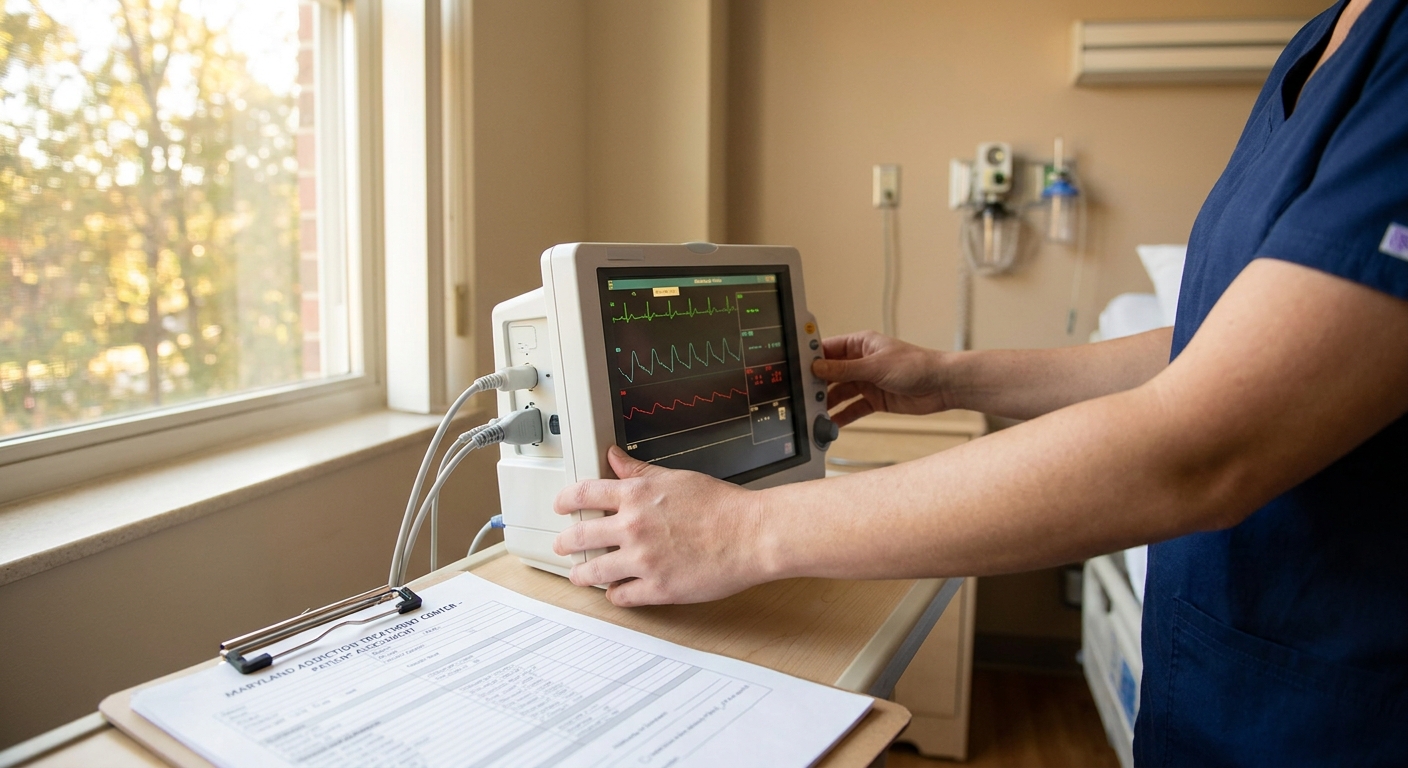
- Around-the-clock monitoring. Nursing staff recheck vital signs and withdrawal scores on a set schedule, often every few hours during the hardest stretch and more often if the numbers climb. Doses go up, come down, or stop based on what they see.
- Comfort and basic care. Fluids, food, rest, a shower, and a quiet place to sleep matter more than most people expect. Staff also treat smaller symptoms like nausea or headaches as they come.
- Early conversations about treatment. As the fog lifts, clinical staff begin talking with your loved one about what comes next and why it matters. This is often the stage where motivation starts to grow.
- Discharge planning and a handoff. Before detox ends, the team recommends a next level of care, such as residential treatment, a partial hospitalization program (PHP), or an intensive outpatient program (IOP), and arranges the move.
The scoring step is the one most families never hear about, yet it is the one that protects your loved one the most. The CIWA-Ar, for example, rates ten signs, including tremor, sweating, nausea, anxiety, agitation, and confusion. When the score rises, medication can go up, and when it falls, the dose comes down. This approach is called symptom-triggered dosing, and it means your loved one gets what their body needs at that moment rather than a one-size-fits-all dose.
At TruHealing Centers, this sequence connects to everything that follows, because the same organization offers residential treatment, PHP, IOP, outpatient care, and aftercare planning, along with separate men’s and women’s drug rehab programs. Step eight does not have to mean a referral to strangers. It can mean a planned move to the next stage of care with a team that already knows your loved one’s history.
Knowing these steps also gives you a way to judge any program you call. Ask which withdrawal scale they use, how often vital signs are checked overnight, and what happens on the last day. A program that answers clearly is showing you how it actually works.
Which medications are used in medical detox, and what does each one do?
Medications in medical detox are matched to the substance. Alcohol withdrawal is usually treated with benzodiazepines, opioid withdrawal with buprenorphine or non-opioid comfort medications, and benzodiazepine dependence with a slow taper, while other medications handle nausea, sleep, aches, and anxiety.
A review of pharmacological strategies for detoxification, available through the National Institutes of Health, describes how these medicines are chosen by substance class. Here is what each group does, in plain language:
- Benzodiazepines for alcohol withdrawal. Medicines such as chlordiazepoxide (Librium), diazepam (Valium), or lorazepam (Ativan) calm the overactive brain that alcohol withdrawal creates. They lower the risk of seizures and delirium tremens. Doses are often guided by CIWA-Ar scores and reduced over several days.
- Thiamine (vitamin B1) for heavy alcohol use. Long-term drinking drains this vitamin. Replacing it helps protect the brain from a serious condition called Wernicke’s encephalopathy.
- Buprenorphine for opioid withdrawal. Buprenorphine, including the combination product Suboxone, is a partial opioid medicine that eases withdrawal and cravings. It is started only after withdrawal has begun, which is one reason the COWS score matters.
- Non-opioid comfort medications for opioid withdrawal. Clonidine or lofexidine can reduce sweating, a racing heart, and restlessness. Other medicines treat diarrhea, stomach cramps, and muscle aches.
- A gradual taper for benzodiazepine dependence. Stopping sedatives all at once can trigger seizures. Instead, a provider lowers the dose slowly, sometimes after switching to a longer-acting benzodiazepine.
- Symptom medications for everyone. Anti-nausea medicine, over-the-counter pain relievers, non-habit-forming sleep aids, and non-addictive options for anxiety help with the parts of withdrawal that make people want to leave.
It may feel strange, or even wrong, that treating drug use involves more medication. Many families worry about trading one drug for another, and that worry deserves a straight answer. These medicines are prescribed, measured, and adjusted by medical staff, with a plan to taper or continue them based on clinical need. That is the difference between a medicine used as part of evidence-based care and a drug that is running someone’s life.
For opioid use disorder, including heroin addiction, the medicine that helps in detox does not always have to stop on discharge day. TruHealing Centers includes medication-assisted treatment (MAT) in its levels of care, so if buprenorphine is helping your loved one, the care team can talk with you both about whether continuing it makes sense as part of the ongoing treatment plan, rather than ending it abruptly.
Cocaine and methamphetamine work differently. No medication is approved by the FDA specifically for stimulant withdrawal, so care focuses on sleep, food, fluids, and close attention to mood, since the crash after stopping stimulants can bring deep depression. In every case, the exact medication and dose belong to the medical provider who has examined your loved one.
Is medical detox painful for the person you love?
Medical detox is uncomfortable, but it is far easier than withdrawing alone, because medications and steady monitoring take the edge off the worst symptoms. It does not make withdrawal painless, and a program you can trust will tell you that up front.
Most people describe the hardest part as feeling awful rather than sharp pain: restless, sweaty, sick to the stomach, achy, and unable to sleep. Here is what to expect during medical detox, in the order it usually happens:
- The first hours. Anxiety is common, both from early withdrawal and from being somewhere new. Intake happens, the first withdrawal score is taken, and the first doses may be given.
- Days one through three. For alcohol and for short-acting opioids like heroin, symptoms usually build and peak in this window. Monitoring is most frequent here, and doses are adjusted most often.
- Days three through five. For many people, physical symptoms start to ease. Appetite returns a little at a time. Sleep is still rough but improving, and conversations with staff get easier.
- The final days of the stay. Your loved one is medically stable. Medications are being tapered or set for the next stage, and the team is finalizing the move into treatment.
- The weeks after. Poor sleep, low mood, irritability, and cravings can linger for weeks after the body settles. This is one of the clearest reasons ongoing treatment matters.
Some discomfort remains because removing all of it would be unsafe. Giving enough sedating medicine to erase every symptom could slow breathing or cause heavy sedation, especially if alcohol or other drugs are still in the body. The goal is safe and manageable, not numb. A taper also asks the body to adjust a little at a time, and that adjustment is something a person feels.
Withdrawal stirs up emotions, too. Fear, shame, and depression often surface in the same days the body is struggling. TruHealing Centers offers anxiety and addiction treatment, depression treatment, and dual diagnosis care (a substance use disorder alongside a mental health condition), so those symptoms can be addressed as part of comprehensive treatment instead of being handed to a separate provider later.
If you are bracing for a phone call on day two with your loved one begging to come home, know that this is a real possibility, because day two is often the hardest. Knowing that ahead of time can help you stay steady, remind them that the worst usually passes, and let the staff do their work.
Who needs medical detox instead of quitting cold turkey?
Anyone who is physically dependent on alcohol, benzodiazepines, or opioids should withdraw with medical care, along with people who use several substances, have serious health problems, or have had a hard withdrawal before. If you are unsure, a medical assessment is the safest way to decide.
Medical detox is usually recommended when any of these fit your loved one:
- Daily or heavy drinking, especially with morning shakes, sweating, or drinking just to feel steady
- Regular benzodiazepine use, whether prescribed or not, since these should never be stopped suddenly
- Opioid use disorder, including heroin, fentanyl, and prescription painkillers such as oxycodone
- Polysubstance use, such as alcohol with pills, or opioids with stimulants, because mixed withdrawal is harder to predict
- Co-occurring medical conditions, including heart disease, liver disease, seizure disorders, diabetes, pregnancy, or older age
- Co-occurring mental health conditions, such as depression, anxiety, or any thoughts of self-harm
- A history of severe withdrawal, including past seizures, hallucinations, delirium tremens, or failed attempts to quit at home
Stimulants like cocaine and meth do not usually cause the dangerous physical withdrawal that alcohol can. The risk is different: exhaustion, deep depression, and sometimes suicidal thoughts in the days after stopping. TruHealing Centers offers dedicated care for cocaine addiction and meth addiction, and a supervised start can make sense when the crash is severe or a person’s mental health is fragile.
You may be thinking that he will never agree to this, or that she will insist she is fine. That fear is real and very common. An adult usually has to agree to enter a voluntary detox program, and in most cases you cannot sign someone in against their will. What you can do is choose a calm moment, describe what you have seen instead of using labels, and offer one small next step, like a single call to ask questions. Someone who says no today may be open to it later, so keep the door open and keep your plan ready. A person with a substance use disorder is still the same person you love, and speaking to them that way often lands better than an ultimatum.
If your loved one has a seizure, becomes confused, sees or hears things that are not there, has chest pain, or cannot stay awake, call 911 right away. That is an emergency, and a hospital emergency room is the right place to go first. Medical detox is the planned next step once the immediate crisis is under control.
How long does medical detox take, and what happens the day it ends?
Most medical detox stays last between three and ten days, with alcohol and opioid detox often taking about five to seven days and stimulant detox often three to five. Benzodiazepine tapers can take longer, and the bigger question is where your loved one goes when detox ends.
Length depends on the substance, how much and how long your loved one has used, whether more than one substance is involved, and their overall health. Long-acting opioids and long-term sedative use usually stretch the timeline. A benzodiazepine taper that begins in detox may continue for weeks in a lower level of care. The care team decides when someone is medically stable by looking at vital signs, withdrawal scores, and how they are eating, sleeping, and thinking.
Discharge day is a risky day. Your loved one feels physically better, but cravings are still there, and the stress waiting at home has not changed. For opioids, tolerance has dropped, which raises overdose risk if they use again. A gap of even a few days between detox and treatment gives all of that room to work.
Because TruHealing Centers offers the full continuum of care, a planned next step can be waiting. Residential treatment means living on site with therapy every day. A partial hospitalization program (PHP) provides several hours of structured treatment most days. An intensive outpatient program (IOP) offers fewer hours each week, so your loved one can start returning to work and family life. Outpatient care, individual and group therapy, and aftercare and continuing care planning then support the stretch after more intensive treatment ends.
The team bases the step-down on how stable your loved one is, how severe their substance use disorder is, what home looks like, and any mental health needs. Someone whose home is full of triggers may need residential care first, while someone with strong support and a steady job may move into PHP or IOP. Either way, the goal is to make the plan before detox ends, so no one sits at home waiting for a callback.
Why detox inside a treatment center protects the weeks that follow
TruHealing Centers offers medical detox as part of comprehensive treatment, so your loved one can move from withdrawal management into residential care, PHP, or IOP with the same organization instead of starting over somewhere new. That continuity is the difference families feel most.
A hospital emergency room is built for emergencies, and it does that job well. It stabilizes a person in crisis and then discharges them, often with a list of phone numbers. It is not designed to provide days of withdrawal management or ongoing addiction treatment. A standalone detox unit goes further, but its work usually ends when withdrawal ends. Families are then left calling around for an open bed while the person they love is home, shaky, and at risk.
TruHealing Centers is part of a nationwide network of accredited facilities, with locations serving Baltimore and Hagerstown, Maryland; Jeffersonville, Indiana; Bethlehem and Rochester, New Hampshire; and Austintown, Ohio. That means families can work with one long-term partner from medical detox through aftercare. Care includes detox, residential treatment, PHP, IOP, outpatient treatment, dual diagnosis treatment, individual and group therapy, and aftercare and continuing care planning, with dedicated support for alcohol use, heroin addiction, cocaine addiction, meth addiction, anxiety, and depression. You can see the full range of care at TruHealing Centers.
You may be wondering whether any program is really about care or just about filling a bed. That is a fair question to ask anyone, including TruHealing Centers. Clinical excellence in detox shows up in the details: how withdrawal is measured, who checks on your loved one overnight, which medications are used, and exactly what happens on discharge day. A program focused on lasting recovery will answer those questions plainly, because its plan does not stop on day seven.
You may also be afraid that this time will end like the last time. No honest program can promise how anyone’s recovery will go. What can change is whether detox leads straight into treatment or into a gap. TruHealing Centers accepts Aetna, Cigna, UnitedHealthcare, Blue Cross Blue Shield, Optum, and Magellan Health, plus private pay, and what your plan covers at each level of care depends on your specific benefits.
Questions you may still be carrying about medical detox
Most families arrive at the same handful of questions, and each one has a straight answer. Here they are in plain language.
Can you die from withdrawal without medical detox?
Yes. Withdrawal from alcohol and benzodiazepines can cause seizures, delirium tremens, and heart complications that can be fatal without medical care. Opioid withdrawal is rarely deadly by itself, but dehydration and a return to use with lower tolerance can be dangerous.
How often do nurses check on someone during medical detox?
In a medically supervised setting, staff are present around the clock. During the hardest days, nursing staff typically recheck vital signs and withdrawal scores every one to four hours depending on severity, and less often as symptoms settle.
What happens if withdrawal symptoms get worse during detox?
The team adjusts. Doses change, checks become more frequent, and a medical provider steps in when scores pass set limits or complications appear. If someone needs hospital-level care, they are transferred to a hospital.
Does insurance cover medical detox at TruHealing Centers?
It depends on your plan. TruHealing Centers accepts Aetna, Cigna, UnitedHealthcare, Blue Cross Blue Shield, Optum, and Magellan Health, along with private pay, and a benefits check before admission shows what your specific plan allows.
What is the difference between medical detox and rehab?
Medical detox manages physical withdrawal over several days. Rehab, which includes residential treatment, PHP, and IOP, treats the substance use disorder itself through therapy, skill building, and relapse prevention over weeks or months.
Can your loved one go home after detox, or do they have to stay in treatment?
Detox is voluntary, so an adult can choose to leave. Getting through withdrawal treats the body, but it does not treat the substance use disorder. That is why TruHealing Centers offers residential treatment, PHP, and IOP, so a next step can be planned before detox ends.
Your next step is one phone call, not a final decision
The safest next step is to call TruHealing Centers, have your insurance benefits checked, and ask which level of care fits your loved one right now. You do not need everything figured out before you call.
You have carried a lot to get here. You have watched, worried, covered for them, and waited. A call does not commit anyone to anything. It gets you real answers about what they do in medical detox, what your insurance benefits cover, and what the days after withdrawal could look like with comprehensive treatment already in place.
Before you call, write down three things: what your loved one uses, roughly how much and how often, and when they last used. Those three answers shape the medical plan more than anything else, and having them in front of you makes the first conversation faster and clearer. Then call TruHealing Centers to verify your insurance and begin the medical detox admission process.
- This article is for general information only and is not medical advice.
- Withdrawal can be dangerous, and medication choices and doses should be decided by a licensed medical provider who has examined the person.
- Insurance coverage varies by plan and is confirmed only through a benefits check.
- If you or someone you love is in immediate danger, call 911.
- For a mental health crisis or thoughts of suicide, call or text 988.