Your brother said yes to treatment yesterday, and this morning he is researching how to taper at home because he is terrified of withdrawal. Or maybe your husband decided last night that Monday will be day one, and now he is reading online forum threads about detoxing from benzos alone in the guest room. The mistakes that make detox dangerous rarely look like mistakes. They look like trying to save money, trying to stay in control, or trying not to burden anyone. That is why knowing what not to do during a detox matters as much as knowing what to do.
If you are the family member holding all of this together, you are probably running on very little sleep and a lot of fear. You may worry that he will change his mind, or that bills you cannot see yet will bury your family. You may wonder whether a treatment center is safe and honest or just trying to fill a bed. Those worries are fair. They are also the same worries that push families toward a plan that feels cheaper and more private: a long weekend at home, a bottle of vitamins, and hope.
Cost does not have to be what decides this. TruHealing Centers works with many major insurance providers to verify benefits and bill in-network or out-of-network as applicable, and private pay is also available for comprehensive treatment. You can ask the admissions team about your loved one’s benefits on the first call. Below, you will find what medical detox is, what happens there, and six mistakes that make withdrawal more dangerous or relapse more likely. For each one, you will see why it happens and what medically supervised detox does differently.
What is medical detox, and why does it matter?
Medical detox is a short, supervised stay where doctors, nurses, and support staff help a person safely stop using alcohol or drugs. Its job is to manage withdrawal: the physical and emotional symptoms that show up when a body that has adapted to a substance suddenly goes without it. Instead of facing those symptoms alone, your loved one has a care team watching vital signs, giving medication when it is needed, and stepping in early if something changes.
It helps to think of medical detox as the doorway to treatment, not the whole house. Detox steadies the body so the deeper work can begin. At TruHealing Centers, that deeper work happens within a nationwide network of accredited facilities offering the full continuum of care: medical detox, residential treatment, a partial hospitalization program (PHP), an intensive outpatient program (IOP), outpatient treatment, and aftercare and continuing care planning. Locations serve Baltimore and Hagerstown in Maryland, as well as Jeffersonville, Indiana, and Bethlehem and Rochester, New Hampshire. For a family that is already exhausted, that means one long-term partner for every stage instead of a new search each time one stage ends.
What do they do in medical detox?
If you have never seen the inside of a detox program, the unknown can feel almost as frightening as the withdrawal itself. Here is the short version of what typically happens:
- A first phone call. You or your loved one talk with admissions about what is going on and which insurance plan applies.
- A full assessment on arrival. A medical team reviews which substances your loved one uses, whether alcohol, heroin, cocaine, meth, or pills, how much, how recently, past withdrawals, health conditions, and symptoms of anxiety or depression.
- A personal detox plan. Based on that assessment, clinicians decide which medications, if any, may help keep withdrawal safer and more manageable for that person.
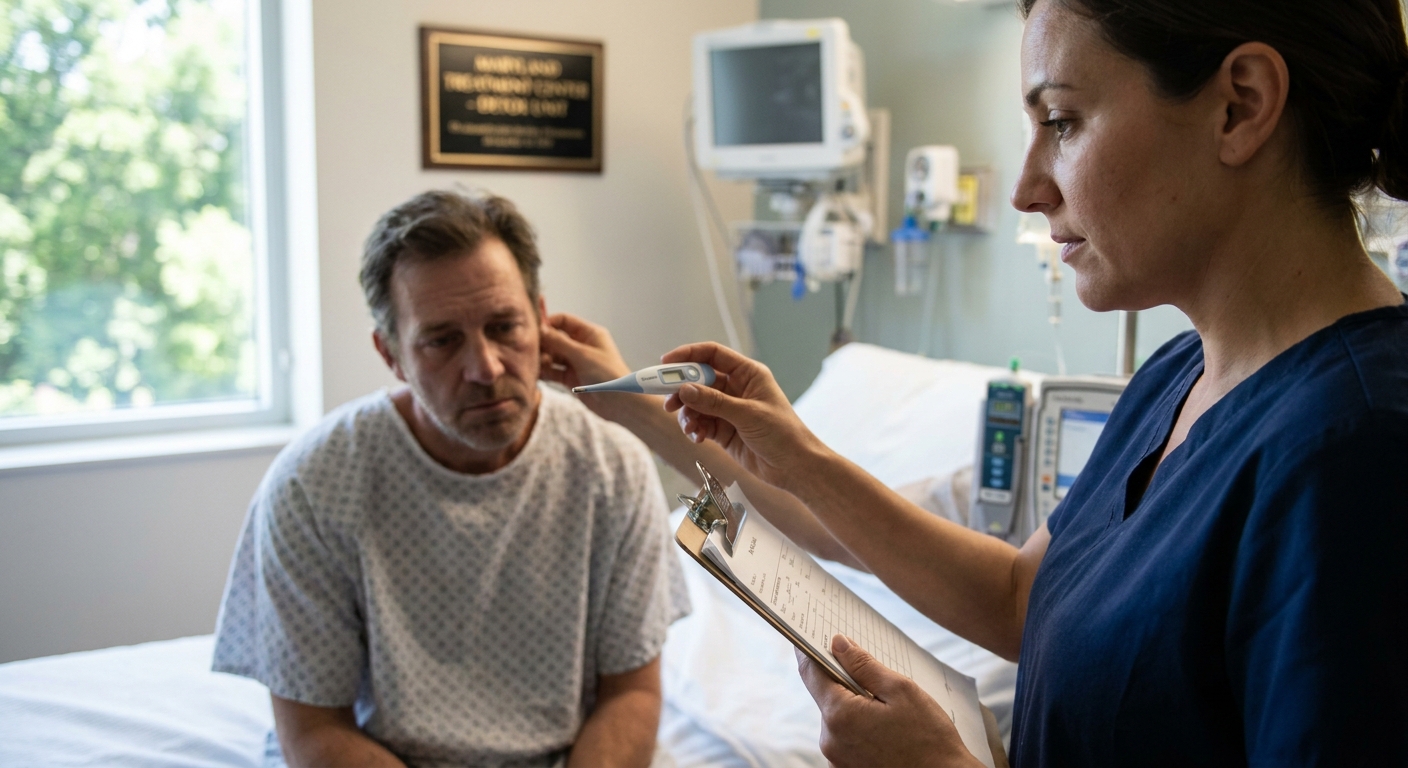
- Ongoing monitoring. Staff check blood pressure, heart rate, temperature, and withdrawal symptoms on a regular schedule.
- Medication and comfort care. Doses may be adjusted as symptoms rise or fall, and your loved one gets fluids, nutrition, and rest.
- Early emotional support. Counseling begins while the body heals, so your loved one is not left alone with racing thoughts.
- A plan for what comes next. Before detox ends, the team recommends the right next level of care, such as residential treatment, PHP, or IOP.
With that picture in mind, the mistakes below become easier to spot.
What not to do during a detox from alcohol or benzos? Never quit them on your own
Never stop heavy drinking or daily benzodiazepine use all at once without a medical team involved. Withdrawal from these two substances can cause seizures and delirium tremens, a dangerous state of severe confusion, racing heart, and fever that needs emergency-level care.
Here is why. Alcohol and benzodiazepines such as alprazolam (Xanax), clonazepam, lorazepam, and diazepam both slow the brain down. Many families are surprised to learn that Xanax is not an opioid, but it carries its own serious withdrawal risks. Over months of use, the brain pushes back to keep itself awake and alert. When the substance disappears overnight, that push is still there, with nothing holding it in check. Shaking, sweating, and anxiety are the mild end of what follows, while seizures and delirium tremens are the dangerous end. The highest-risk window is often the first few days, but with some longer-acting benzodiazepines, symptoms may not start for several days. A calm Saturday does not prove that Monday will be safe.
If your loved one has quit cold turkey before and “got through it,” that history is not the comfort it seems. Clinicians have long described a pattern called kindling, in which repeated alcohol withdrawals tend to become more severe over time. Surviving the last attempt says very little about the next one.
Who may benefit from medical detoxification?
Medical detox may be helpful for:
- People who drink heavily every day or most days
- Anyone taking benzodiazepines daily for more than a few weeks, prescribed or not
- Anyone who has had a withdrawal seizure or delirium tremens before
- People who use opioids, including heroin or fentanyl, and have struggled through withdrawal in the past
- People who use cocaine or meth heavily and crash into severe depression, exhaustion, or paranoia when they stop
- People who mix substances, such as alcohol with pills
- People with heart problems, diabetes, pregnancy, or other medical conditions
- People living with depression, anxiety, or thoughts of self-harm alongside substance use
In a medically supervised program like drug and alcohol detox at TruHealing Centers, trained staff keep watch and adjust medication as withdrawal changes. That steady watch is the difference between catching a dangerous change early and finding out about it too late.
Can your loved one really detox in the room where they used?
Detoxing at home, surrounded by the people, places, and phone numbers tied to using, makes withdrawal much harder to finish. Cravings tend to peak while the body feels its worst, and at home the substance is often one text away.
Think about what home holds. There is the couch where he drank, the garage where pills were hidden, the gas station on the drive to work, and the friend who still texts on Friday nights. In the worst hours of withdrawal, the brain is hunting for relief, and familiar surroundings hand it a map. This is not a character flaw. It is how the brain of a person with a substance use disorder responds to cues it has learned over years.
It is also an unfair job to give yourself. You cannot be the nurse, the guard, and the person who keeps the household running all at once, and you cannot stop an adult from walking out to the car at 2 a.m. Many families try home detox out of love and come out of it exhausted, frightened, and blaming themselves for something no untrained person could have managed.
TruHealing Centers offers residential treatment as the next level of care after detox, with separate men’s and women’s drug rehab programs, so your loved one can move from withdrawal management into structured treatment with one provider instead of going home in between. That gap between “detox is done” and “treatment starts next week” is where many plans fall apart. Staying in a protected setting gives new coping skills time to take hold before everyday triggers return. Later, PHP, IOP, and outpatient care give your loved one room to practice those skills while stepping back into daily life.
This is also where an addiction-focused detox differs from a hospital stay. An emergency room can stabilize a crisis, and you should never skip it when someone is in danger. But hospital stays often end with a discharge sheet and a list of numbers to call. A full-continuum provider can carry your loved one into the next stage of comprehensive treatment without forcing your family to start the search over.
Why does one drink to take the edge off make withdrawal more dangerous?
Using alcohol, leftover pills, or street drugs to get through withdrawal does not end dependence. It restarts it, and it can lead to overdose because tolerance drops quickly during detox.
This mistake has many versions. Someone in opioid withdrawal drinks to fall asleep. Someone shaking from alcohol withdrawal takes a friend’s Xanax. Someone uses “just a little” heroin to stop the cramps. Someone coming down from meth or cocaine drinks to quiet the agitation. Each one feels like a small, sensible fix in the moment. Mixing alcohol with benzodiazepines or opioids is especially risky because all three can slow breathing, and together they can slow it to a dangerous point.
Tolerance is the hidden trap. After even a few days without opioids, the body can no longer handle the amount it once did. If your loved one goes back to the old dose, the result can be an overdose, and today’s street supply may contain fentanyl that makes any dose impossible to judge. The days right after stopping are among the riskiest of all.
Some families reach for detox teas, kits, or vitamin packs instead. The National Center for Complementary and Integrative Health reports there is no compelling research that commercial detox programs remove toxins from the body, and some of these products may be harmful. NIH News in Health notes that the liver and kidneys already do the work of clearing waste. None of these products can stop a withdrawal seizure.
What drugs may be used in medical detox?
Medications commonly used in medical detox include:
- Buprenorphine, often given as Suboxone, to ease opioid withdrawal and cravings in some patients
- Benzodiazepines given on a set, tapering schedule to help prevent alcohol withdrawal seizures
- A slow, supervised taper for people dependent on benzodiazepines
- Non-opioid medications such as clonidine for sweating, racing heart, and restlessness
- Comfort medications for nausea, diarrhea, and sleep
- Thiamine and other vitamins for people who have been drinking heavily
At TruHealing Centers, medication support during detox means the people in its care do not have to self-medicate or swap one substance for another to get through the hardest days.
Suffering in silence does not make sobriety more real
Do not hide withdrawal from family or from the medical team. Symptoms no one knows about are symptoms no one can treat, and isolation is one of the reasons people leave detox early.
People hide withdrawal for very human reasons. They feel ashamed, they want to look strong, or they hope that saying “I’m fine” will get them home sooner. Some carry an old belief that recovery only counts if it hurts. Withdrawal is not a test of willpower, and white-knuckling it alone proves nothing except how much pain one person can absorb.
Hiding symptoms has a practical cost, too. Many detox teams use scored checklists, such as the CIWA-Ar for alcohol and the COWS for opioids, to rate withdrawal and decide how much medication someone needs. Part of each score comes from questions the patient answers: Do you feel anxious? Any nausea? Are you seeing or hearing things that are not there? If your loved one downplays everything, the score comes out low, the medication stays low, and the next few hours get harder than they need to be.
Families make a version of this mistake as well. You might soften the story for relatives or for the intake team because the truth feels embarrassing. But the care team needs the honest picture: what he uses, how much, how often, what else is in the mix, and whether he has ever had a seizure or a mental health crisis. Those details shape a safe plan, and the team has heard it all before without judgment.
TruHealing Centers offers individual and group therapy along with dual diagnosis treatment, including anxiety and addiction treatment and depression treatment, so the relationship with clinicians can begin early instead of waiting until withdrawal ends. When someone feels known by their care team, staying through the hardest days often becomes easier.
Is detox over when the shakes stop?
No. Detox clears the substance and steadies the body, but it does not treat the reasons a person started or kept using. Stopping there is one of the most common ways people end up back where they began.
SAMHSA’s TIP 45 quick guide for clinicians describes detox as having three parts: evaluation, stabilization, and fostering the patient’s entry into treatment. That third part is easy to overlook. A well-run detox is built to hand your loved one into what comes next, not to send them home and hope for the best.
What to expect during medical detox and the weeks after
Here is what the path usually looks like at TruHealing Centers:
- Evaluation. The team reviews substances, health history, mental health symptoms, and past withdrawals to set a safe plan.
- Stabilization. Medication, monitoring, fluids, food, and rest carry your loved one through acute withdrawal.
- Planning the next step. Before detox ends, the team talks through the right next level of care.
- Residential treatment. Structured days with individual and group therapy and dual diagnosis care for conditions like anxiety and depression.
- PHP and IOP. Fewer hours in treatment and more time at home as skills grow.
- Outpatient care and aftercare planning. Continuing care planning for the months after formal treatment.
Timelines vary from person to person. For some people, withdrawal from short-acting opioids like heroin peaks within a few days and eases within about a week. Alcohol withdrawal often settles within a week as well. Benzodiazepine withdrawal can take longer because tapering must go slowly. After that, many people still face poor sleep, low mood, and anxiety for weeks, which is exactly when ongoing care matters most. The brain often needs months to rebuild healthy coping and reward patterns.
Day three is a common turning point. The worst physical symptoms ease, your loved one feels better, and leaving starts to sound reasonable. If you get a call asking for a ride home, talk with the care team before you grab your keys.
Is taking medication in detox just trading one drug for another?
No. Medication in detox is prescribed, dosed, and watched by a medical team to make withdrawal safer and more bearable, which is very different from using a substance to get high.
Is medical detox painful?
Medical detox is usually uncomfortable, but for many patients it is more manageable with appropriate medication and steady care. The experience varies from person to person, and withdrawal severity depends on which substances were used, for how long, and individual health factors.
You may still worry that medication means your loved one is not “really” getting better. That fear often comes from relatives, friends, or peer groups who believe recovery only counts without any medication at all. It is an understandable belief, and it causes a lot of needless suffering. Buprenorphine, for example, is approved by the FDA for opioid use disorder. At prescribed doses, it calms withdrawal and cravings with far less of the high that opioids produce, and Suboxone adds naloxone, which discourages misuse. For alcohol withdrawal, a carefully tapered benzodiazepine schedule protects against seizures.
Refusing medication does not make recovery more honest. Most often, it makes withdrawal harder to finish and leaving early more likely. Evidence-based care means using the tools that keep someone safe and in treatment long enough to do the deeper work.
The questions families often carry into that first call
These are straight answers to questions many families are afraid to ask out loud before detox begins.
What not to do during a detox?
Do not quit alcohol or benzodiazepines suddenly on your own, detox surrounded by old triggers, use other substances to ease symptoms, hide symptoms from the care team, refuse prescribed medication out of fear, or treat the end of withdrawal as the end of treatment.
What is the most dangerous mistake people make during detox?
Stopping alcohol or benzodiazepines suddenly without medical supervision. Withdrawal from these substances can cause seizures and delirium tremens, often within the first few days, and both can be life-threatening without medical care.
Can I detox at home if I use the right vitamins and taper schedule?
Home detox from alcohol, benzodiazepines, or opioids carries medical risks that vitamins cannot address. The NCCIH finds no compelling evidence that commercial detox products work, and self-tapering without medical oversight is hard to judge and easy to abandon when cravings hit.
What if my loved one refuses to go, or it does not work this time?
That fear is real, especially if past attempts ended in relapse. Admissions staff can talk with you about how to approach the conversation, and a full continuum of care means support does not stop when detox ends, which is often what was missing before.
What happens if someone leaves detox early because they feel better after two days?
Feeling better is not the same as being past the risk. Some withdrawal symptoms appear later, tolerance drops quickly, and sleep problems, low mood, and anxiety can last for weeks. Leaving early removes support at the moment many people need it most.
How does TruHealing Centers help prevent the mistakes people make during detox?
TruHealing Centers pairs medical detox and medication support with a full continuum of care: residential treatment, PHP, IOP, outpatient care, and aftercare planning. Individual and group therapy and dual diagnosis treatment for anxiety and depression address the reasons behind substance use, whether the struggle is alcohol, heroin, cocaine, or meth, not just the withdrawal.
Does insurance cover medically supervised detox?
Coverage depends on your specific plan and benefits. TruHealing Centers accepts Aetna, Cigna, UnitedHealthcare, Blue Cross Blue Shield, Optum, and Magellan Health, as well as private pay. Ask the admissions team to review your benefits so you know where you stand.
Your loved one said yes. Make the next step the safe one.
A wiser next step is a medically supervised detox, designed to reduce risks and lead into ongoing treatment, not a weekend of white-knuckling at home. Every answer to what not to do during a detox shares one root: trying to carry something alone that was never meant to be carried alone.
TruHealing Centers is part of a nationwide network of accredited facilities built on clinical excellence and a simple idea: detox is the first stage of comprehensive treatment, and lasting recovery comes from what follows. You can learn more about TruHealing Centers’ full range of care before you call.
Before you pick up the phone, write down three things: every substance your loved one uses and roughly how much, the date and time of last use, and any past seizure, hospital visit, or mental health crisis. Those details help the team plan a safe detox from the first hour. Then call TruHealing Centers today to ask about your insurance benefits and begin medically supervised detox with monitoring, medication support, and a planned path into residential treatment.
This article is for general education and is not medical advice. Outcomes vary, and no treatment approach works the same way for every person. If someone in withdrawal has a seizure, severe confusion, chest pain, or trouble breathing, call 911 right away.
Ready to Start Detox the Right Way?
Understanding what to avoid during detox is just the first step,having professional support makes all the difference in your safety and success. If you or someone you care about is considering detox, you don’t have to navigate these critical decisions alone. TruHealing Centers in Owings Mills provides medical detox with 24/7 clinical care designed to keep you safe and comfortable throughout the process.